
This post contains affiliate links, meaning I may earn a commission if you click through and make a purchase. As an Amazon associate, I earn from qualifying purchases. This comes at no additional cost to you. I only recommend products or services that I believe will provide value to my readers based on personal experience or thorough research.
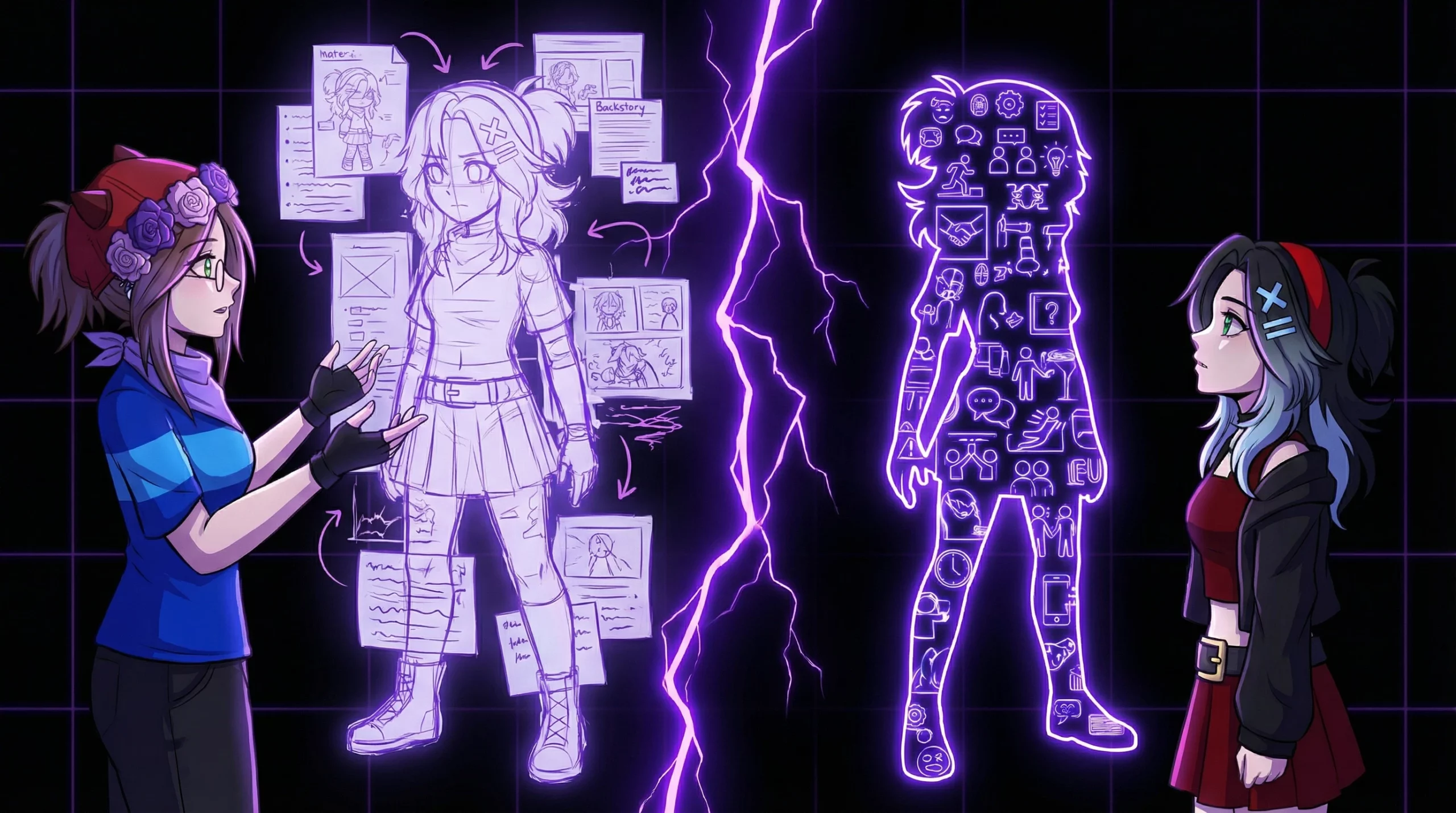
Writers experience characters from the inside out.
Readers experience them from the outside in.
That gap is where most character problems live.
When a writer says, “This character is complex,” what they usually mean is they know a lot about them. When a reader says a character feels complex, they mean they’re noticing patterns, contradictions, and pressure on the page. Those are not the same thing, and confusing them is how well-intentioned characters end up feeling flat.
Characters don’t exist in notes, backstories, or planning documents. They only exist where the reader can see them: in decisions, reactions, and changes over time. Everything else is invisible.
Characters Don’t Live in Your Notes, They Live in the Reader’s Head
Writers build characters by stacking elements: traits, flaws, motivations, histories. Readers don’t receive those elements directly. They infer.
A writer might think, This character is driven by guilt.
A reader thinks, This character keeps avoiding responsibility.
That difference matters.
Readers don’t catalog motivations; they track behavior. They don’t remember backstory; they remember consistency. They don’t experience intention; they experience outcome. If a trait doesn’t alter what a character does under pressure, the reader doesn’t register it as real.
This is why characters can feel “fully developed” to the writer and hollow to everyone else. The work happened internally, but the effect never reached the page.
Why Characters Feel Flat Even When They’re “Well Written”
Flat characters aren’t usually underwritten. They’re under-tested.
A character feels flat when:
• Their behavior doesn’t change under pressure
• Their choices don’t cost them anything
• Their internal conflicts never force external action
From a reader’s perspective, depth isn’t about how much a character has going on, it’s about how often they’re forced to choose between competing impulses. Without that friction, traits blur together and personalities stall.
Another common failure point is explanation replacing evidence. Writers explain who a character is through exposition, dialogue, or internal narration, but readers trust patterns more than statements. If a character says they’re afraid but repeatedly acts without hesitation, the reader believes the action, not the claim.
This disconnect isn’t subtle. Readers feel it immediately, even if they can’t articulate why.
Reader Perception Is Built on Patterns, Not Profiles
Writers think in profiles. Readers think in trajectories.
A reader subconsciously asks:
What does this character usually do?
What do they avoid?
What finally makes them act differently?
That’s it.
If a character behaves the same way across different situations, readers assume that’s the character’s limit. If a backstory doesn’t bend behavior in the present, readers assume it doesn’t matter. If internal conflict never manifests as hesitation, contradiction, or reversal, readers assume it doesn’t exist.
This is why adding more detail rarely fixes character problems. Detail doesn’t create depth—contrast does.
Growth Only Registers When It Breaks a Pattern
Writers often believe they’ve written a character arc because the character understands something new by the end. Readers only believe growth when behavior contradicts earlier behavior.
A realization without a changed decision doesn’t register as growth.
A lesson without consequence feels decorative.
Readers look for moments where the character:
• Makes a choice they previously couldn’t
• Faces something they previously avoided
• Sacrifices a belief they once protected
Without those visible breaks, the arc exists only in theory.
Internal Conflict Only Matters When It Slows the Story Down
Internal conflict isn’t depth unless it interferes.
Readers don’t feel a character’s struggle because the narration says it’s there. They feel it when that struggle causes delay, hesitation, mistakes, or self-sabotage. Conflict that never disrupts momentum reads as flavor text, not substance.
If a character always knows what to do—and does it cleanly—the reader perceives confidence, not complexity. Depth emerges when certainty cracks.
Why Writers Overestimate Their Characters (and How to Correct It)
Writers are generous readers of their own work. They fill in gaps automatically because they know what was meant. Actual readers don’t.
This is why characters often feel thinner on reread than expected. Once intention is removed, only what’s on the page survives.
A useful mental shift:
Stop asking Who is this character?
Start asking What would a reader predict they’ll do next?
If the answer is always obvious, the character isn’t evolving. If the prediction never changes, neither does the reader’s perception.
Depth Is a Reader Experience, Not a Writer Achievement
Strong characters aren’t defined by how much effort went into them. They’re defined by how much tension they generate when forced to act.
Readers don’t reward preparation. They reward perception.
They don’t see the blueprint. They see the cracks.
When characters feel real, it’s not because they were built carefully—it’s because their behavior made sense, until it didn’t, and that shift felt earned.
FAQs: Character Development Through Reader Perception
Why do my characters feel real to me but flat to readers?
Because readers don’t experience your intentions. They only experience behavior, patterns, and visible change.
How do readers actually judge character depth?
Through repeated choices under pressure and how those choices evolve over time.
Why doesn’t my character arc feel earned?
Because the character’s final behavior doesn’t clearly contradict their earlier patterns.
Can a character have depth without a detailed backstory?
Yes. Readers respond to present behavior, not hidden history.
Why do my characters feel inconsistent?
Because their actions don’t align with the patterns the reader has already learned to expect.
What makes readers emotionally connect to a character?
Seeing the character struggle between competing desires and suffer meaningful consequences.
Why do “flawed” characters still feel boring?
Because flaws that don’t affect decisions don’t register as real.
How can I tell if a character is actually working?
Ask whether a reader could predict their next choice—and whether that prediction changes over the story.
Leave a Reply