
This post contains affiliate links, meaning I may earn a commission if you click through and make a purchase. As an Amazon associate, I earn from qualifying purchases. This comes at no additional cost to you. I only recommend products or services that I believe will provide value to my readers based on personal experience or thorough research.
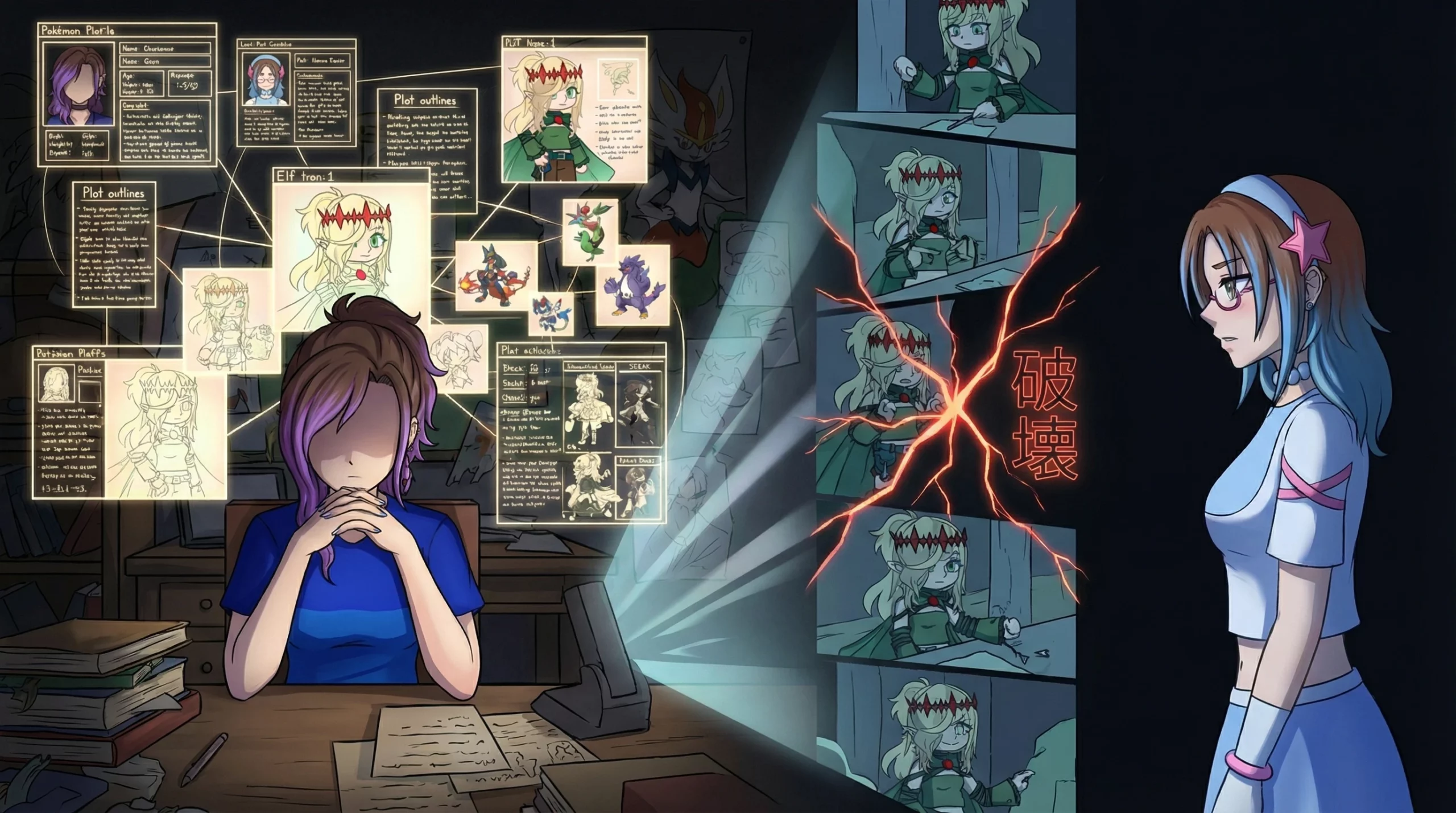
Writers experience stories from the inside out. Readers experience them from the outside in.
Most storytelling mistakes happen in that gap.
What feels rich, intentional, or meaningful to the writer often reads as thin, confusing, or flat to the reader, not because the writer failed to care, but because the effect never made it onto the page.
These five mistakes aren’t about talent or effort. They’re about misunderstanding how stories are perceived.
1. Mistaking Character Thought for Character Depth
Writers often believe characters are deep because they know their backstory, motivations, and inner wounds.
Readers don’t see any of that unless it changes behavior.
From the reader’s perspective, a character only exists in what they do, what they avoid, and what finally forces them to act differently. Internal complexity that never alters decisions registers as invisible.
Failure case: The character is “complicated” in notes but behaves consistently and safely on the page.
How to avoid it: Stop asking who the character is. Start asking what pressure makes them contradict themselves, and whether that contradiction costs them something.
2. Using Familiar Plots Without Breaking Reader Expectations
Cliché plots don’t fail because they’re familiar. They fail because nothing challenges the reader’s predictions.
Readers track patterns. When events unfold exactly as expected, the story feels finished before it ends.
Writers often think originality comes from new ideas. Readers experience originality when a familiar setup bends in an unfamiliar way.
Failure case: The story is competently written, but every turn feels pre-approved.
How to avoid it: Identify what the reader assumes will happen next, and make that assumption uncomfortable, delayed, or costly instead of simply wrong.
3. Forgetting That Conflict Is a Reader Experience
Writers often include conflict conceptually—arguments, obstacles, tension on paper, but readers only feel conflict when it forces trade-offs.
If a character can pursue their goal cleanly, without sacrifice or hesitation, the reader perceives motion, not struggle.
Conflict that doesn’t demand choice reads as decoration.
Failure case: Plenty of events, but no moment where the character must lose something to gain something else.
How to avoid it: Design conflict that makes every forward move close another door.
4. Treating Pacing as Speed Instead of Resistance
Many writers think pacing problems come from scenes being too long or too short.
Readers experience pacing through friction.
A story feels rushed when decisions are easy. It feels slow when nothing resists change.
Perfect execution drains tension. Messy progress creates it.
Failure case: Scenes happen quickly, but nothing lingers emotionally.
How to avoid it: Let internal conflict delay action. Let doubt create mistakes. Let decisions land unevenly.
5. Relying on Structure Without Changing Perception
A story can have a clear beginning, middle, and end, and still feel hollow.
Structure organizes events. Meaning comes from how those events change what the reader expects from the character.
If the reader predicts the character’s choices the same way at the end as at the beginning, the structure worked, but the story didn’t.
Failure case: A clean arc with no visible shift in behavior.
How to avoid it: Track whether the reader’s prediction of the character changes over time. If it doesn’t, neither does engagement.
Depth Is a Reader Experience, Not a Writer Achievement
Stories don’t succeed because of how much thought went into them.
They succeed because behaviour made sense, until it didn’t, and that break felt earned.
Readers don’t see preparation. They see patterns. They don’t feel intention. They feel consequence.
FAQs: Story Making Through Reader Perception
Why do my stories feel strong to me but flat to readers?
Because readers don’t experience your intentions, only visible behaviour, patterns, and change.
What is the most common mistake beginners make in story writing?
Assuming depth exists because it was planned, not because it appears through decisions and consequences.
Why don’t detailed backstories fix flat characters?
Because readers only register history when it alters present behavior under pressure.
How do readers judge character depth?
By tracking choices, consistency, contradiction, and how those patterns evolve.
Why does my character arc feel unearned?
Because the final behavior doesn’t clearly contradict earlier behavior.
Is conflict required in every story?
Yes. Without forced trade-offs, readers perceive movement without meaning.
Why does my pacing feel off even with action?
Because clean momentum reads as certainty. Resistance creates tension.
Why do flawed characters still feel boring?
Because flaws that don’t affect decisions don’t register as real.
How can I diagnose story problems early?
Ask what a reader would predict next, and whether that prediction changes.
Leave a Reply