
This post contains affiliate links, meaning I may earn a commission if you click through and make a purchase. As an Amazon associate, I earn from qualifying purchases. This comes at no additional cost to you. I only recommend products or services that I believe will provide value to my readers based on personal experience or thorough research.
Storyboarding doesn’t start with drawing skills — it starts with thinking. At its core, it’s a way to train your brain to see moments instead of sentences. Beginners often get stuck trying to “draw well,” when the real skill is learning how to break an idea into clear visual beats.
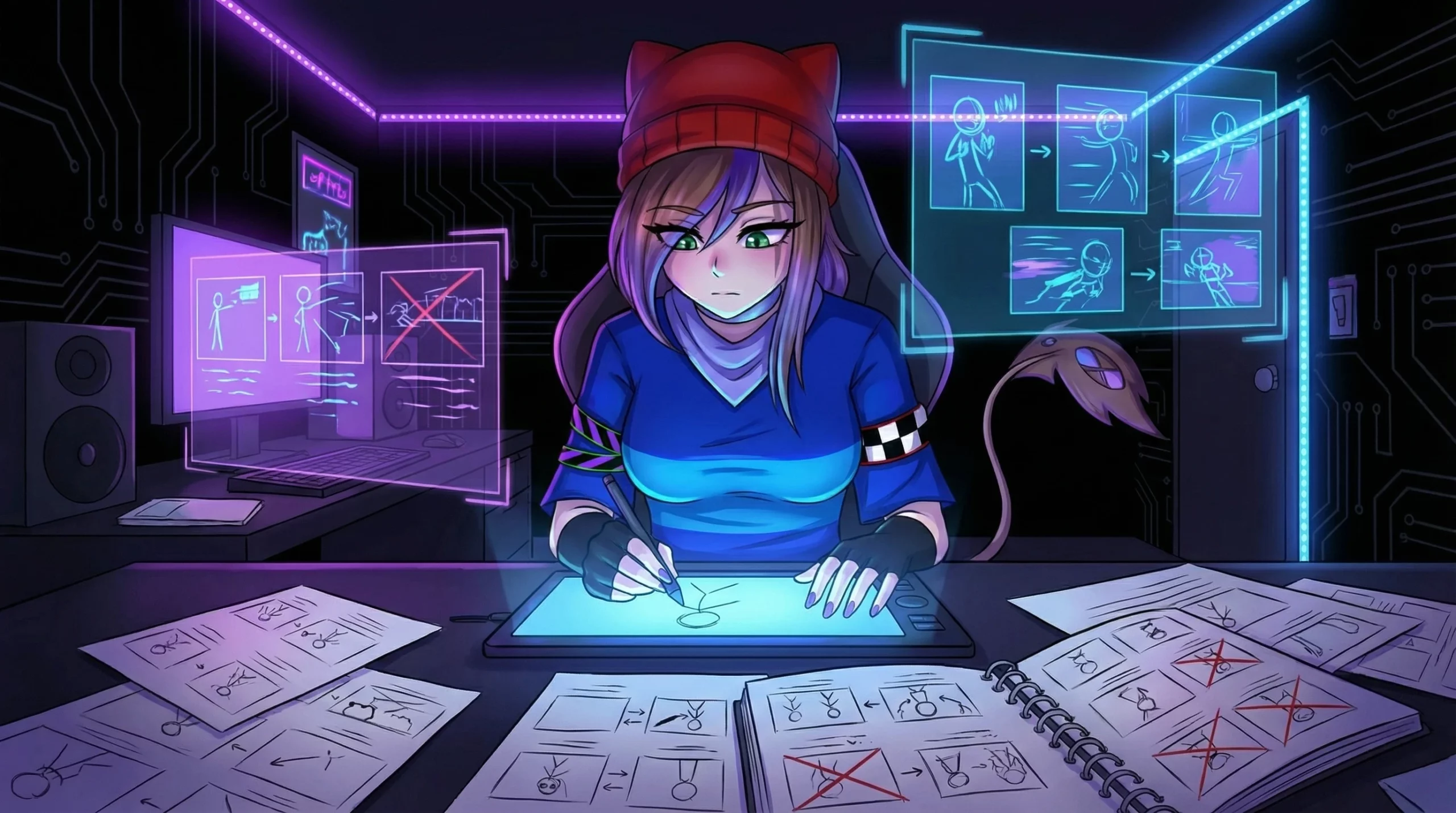
If your boards feel awkward or messy, that’s not failure — it’s proof you’re learning. Storyboarding is meant to be rough. It’s closer to visual note-taking than illustration. The goal is to capture intent: who’s acting, what’s changing, and where the viewer’s attention should go.
Learning to Think Visually
Beginner storyboard artists often think in words first. They imagine dialogue, explanations, or internal thoughts. Visual thinking flips that process. You ask: what does this moment look like if no one speaks?
Strong visual thinking focuses on change. A character entering a space, a shift in emotion, a sudden action — these moments translate naturally into panels. If nothing changes from one frame to the next, the storyboard will feel stiff.
A helpful exercise is to imagine freezing a scene at its most important instant. That single frozen moment is often more powerful than a fully explained sequence.
Common Beginner Mistakes (And Why They’re Normal)
One of the biggest beginner traps is over-detailing. Spending too long perfecting a frame kills momentum and confidence. Storyboards thrive on speed and clarity, not polish.
Another mistake is drawing poses instead of actions. A character standing still rarely tells a story. Even subtle motion — leaning, turning, reaching — adds life and intention.
Beginners also tend to judge their work too early. A rough storyboard isn’t a finished product. It’s a thinking tool. If it feels uncomfortable, it’s doing its job.
Mindset Over Mechanics
The most important skill in beginner storyboarding isn’t technique — it’s permission. Permission to be messy, fast, and experimental. Every loose board strengthens your instincts, even if it never gets shown to anyone else.
Quantity beats perfection. Making many small, imperfect boards teaches more than polishing a single sequence. Each attempt trains your sense of timing, framing, and visual clarity.
Treat storyboarding like exploration, not performance. You’re not proving skill — you’re discovering how ideas translate into images.
FAQs: Storyboarding for Beginners
What is storyboarding for beginners?
Storyboarding for beginners is a way to practice visual thinking by breaking ideas into simple moments and actions, not finished drawings.
Do I need to be good at drawing to storyboard?
No. Simple shapes and rough sketches work as long as the idea is clear.
What is the biggest mistake beginners make in storyboarding?
Trying to make each frame look perfect instead of focusing on movement and intent.
How do I improve my visual thinking?
Practice imagining scenes in motion and capturing key moments quickly.
Why do beginner storyboards feel stiff?
They focus on posing rather than change, action, or emotional shifts.
Should beginners focus on detail?
No. Clarity and simplicity matter far more than detail.
Is it okay to redo or abandon storyboards?
Yes. Redrawing and discarding boards is part of learning.
What mindset helps beginners improve fastest?
Viewing storyboarding as exploration rather than a performance.


Leave a Reply