This post contains affiliate links, meaning I may earn a commission if you click through and make a purchase. As an Amazon associate, I earn from qualifying purchases. This comes at no additional cost to you. I only recommend products or services that I believe will provide value to my readers based on personal experience or thorough research.
If you look at fan art today, it’s easy to think it’s always been like this.
Endless posts. Instant feedback. Massive collaborations happening across the world.
But it didn’t start that way.
Fan art has been around for decades, and for most of that time, it was way quieter, more personal, and a lot harder to share.
So before jumping into how it works now, it’s worth looking at how it got here.
The Early Days (Before Everything Was Online)
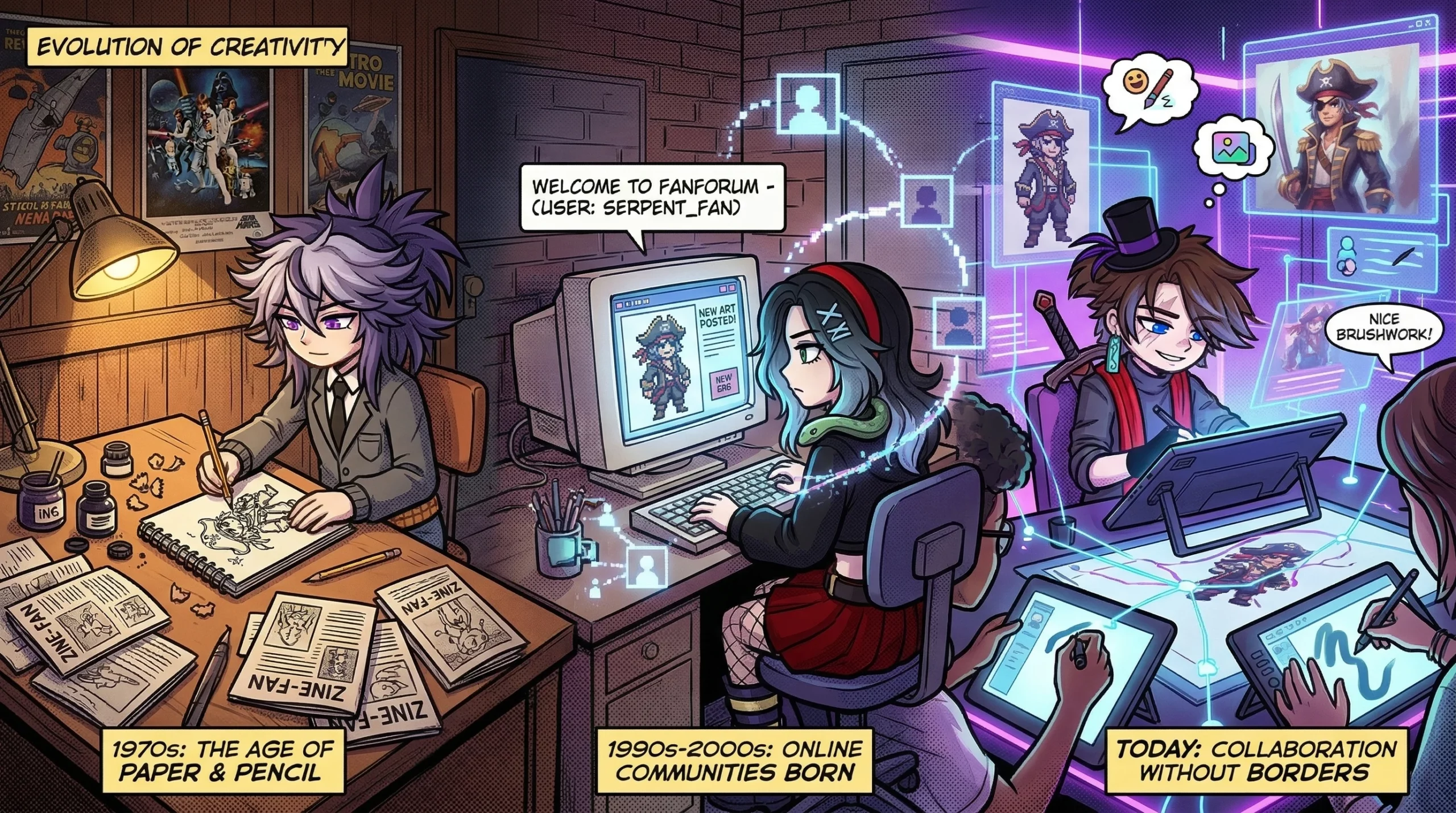
Back in the 1960s and 70s, fan art didn’t live on feeds or profiles, it lived in zines and convention spaces.
Fans of things like Star Trek would draw characters by hand and share them physically.
There were no algorithms. No likes. No instant reach.
Fan art wasn’t about visibility, it was about connection.
When the Internet Changed Everything
Once the internet showed up, everything shifted.
Artists could upload work and reach people globally.
Communities formed quickly, and platforms like DeviantArt expanded access.
The Rise of Digital Tools and Social Platforms
Digital tools made art more accessible.
Social platforms accelerated trends, sharing, and collaboration.
Fan art became interactive and community-driven.
More Than Just Art
Fan art evolved into self-expression and storytelling.
Communities formed around shared creativity and identity.
The Complicated Side: Copyright and Ownership
Fan art exists in a gray legal area.
Respecting creators and crediting sources helps maintain balance.
The Real Challenges Behind the Scenes
Artists face art theft, burnout, and inconsistent feedback.
Focusing on enjoyment helps maintain long-term creativity.
Where Fan Art Is Headed Next
New tools like AI and 3D art are shaping the future.
Fan art continues evolving as a global creative space.
So What Does All This Mean?
Fan art grew from small exchanges into global communities.
And it’s still growing.
Leave a Reply