This post contains affiliate links, meaning I may earn a commission if you click through and make a purchase. As an Amazon associate, I earn from qualifying purchases. This comes at no additional cost to you. I only recommend products or services that I believe will provide value to my readers based on personal experience or thorough research.
Character design is where genre really starts to show its personality. Before a character says a word, their silhouette, clothing, posture, and details already tell the audience what kind of world they belong to. A well-designed character doesn’t just exist in a story—they feel like they were born from it.
Each genre has its own visual language, rules, and expectations. The trick isn’t following those rules blindly, but understanding them deeply enough to bend them without breaking immersion.
Fantasy Characters: Magic, Myth, and Symbolism
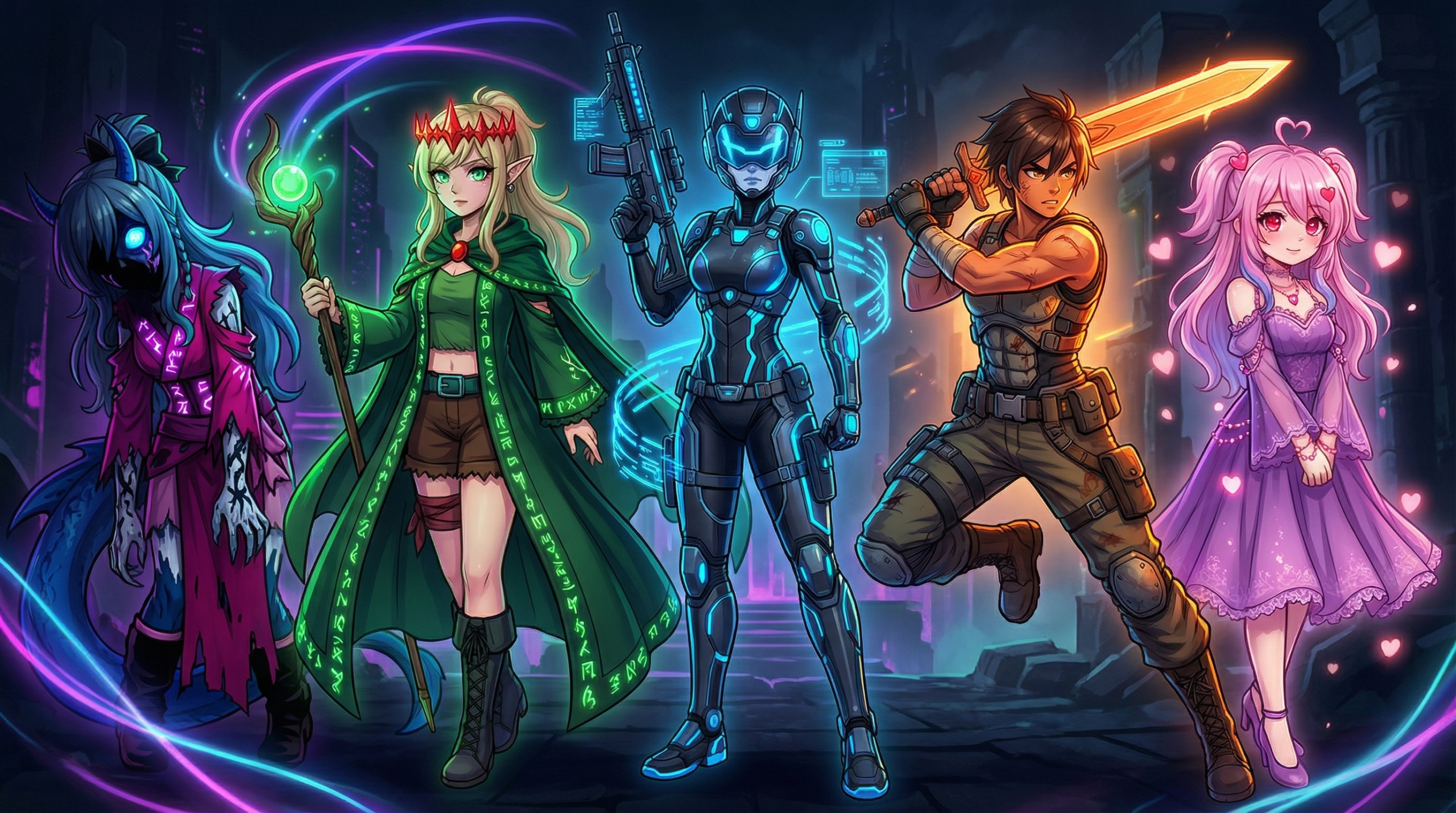
Fantasy characters thrive on symbolism. Their designs often pull from mythology, folklore, and ancient storytelling traditions. Flowing fabrics, engraved armor, staffs, cloaks, and glowing elements all reinforce the sense of magic and history.
The strongest fantasy designs balance the extraordinary with the human. A mage might wield impossible power, but their posture, scars, or worn clothing can hint at years of struggle. That contrast keeps them grounded.
Fantasy characters also benefit from clear visual hierarchies. Royalty looks distinct from commoners. Warriors carry the weight of battle in their armor. Every design choice should quietly answer the question: where does this character fit in this world?
Sci-Fi Characters: Technology Meets Identity
Sci-fi character design is rooted in function. Technology isn’t decoration—it’s survival. Clothing, gear, and body modifications should look purposeful, shaped by the environment and society the character lives in.
Clean lines, modular outfits, glowing interfaces, and cybernetic enhancements often signal advanced worlds. But the best sci-fi characters aren’t just shiny—they show how technology has changed them emotionally and socially.
A pilot’s worn suit, a hacker’s neural implant, or a soldier’s augmented limbs can all tell stories about class systems, ethics, and power structures. Sci-fi design works best when it quietly asks: what did progress cost?
Horror Characters: Fear Through Design
Horror characters are built around discomfort. Their designs often rely on distortion, asymmetry, or the unsettling feeling that something is slightly wrong. Fear comes from what feels familiar—but broken.
Less is often more. A shadowed face, unnatural proportions, or an eerie stillness can be far more effective than excessive gore. Horror thrives on implication, letting the audience’s imagination fill in the blanks.
Backstory plays a massive role here. Trauma, obsession, curses, or transformation often shape the character’s appearance. When fear is rooted in emotional pain, the design hits harder and lingers longer.
Action Characters: Motion, Strength, and Readability
Action characters are designed for movement. Strong silhouettes, clear shapes, and readable gear are essential, especially in fast-paced scenes. If a character can’t be recognized mid-motion, the design fails.
Their builds often reflect their fighting style—lean and agile, bulky and powerful, or balanced and tactical. Clothing and equipment should enhance motion, not restrict it.
What makes action characters memorable isn’t just strength—it’s vulnerability. Scars, worn gear, or imperfect armor add realism and hint at battles survived, not just battles won.
Romantic Characters: Emotion First, Design Second
Romantic character design prioritizes emotional readability. Subtle details—soft silhouettes, expressive faces, relaxed posture—help convey vulnerability and intimacy.
Costume choices often reflect personality and emotional state rather than power or status. Small changes in appearance can signal growth, heartbreak, or connection without spelling it out.
Great romantic characters feel real because their flaws are visible. Imperfect smiles, nervous gestures, or mismatched outfits make them human and relatable, grounding the story’s emotional core.
FAQs
Q: Why does character design change by genre?
A: Each genre has different storytelling goals, themes, and emotional expectations, which influence how characters should look and feel.
Q: What makes a fantasy character design effective?
A: Strong symbolism, world consistency, and a balance between magical elements and human traits.
Q: How do sci-fi designs stay believable?
A: By making technology feel functional, integrated into daily life, and reflective of the world’s social structure.
Q: Why is subtlety important in horror character design?
A: Implied fear and psychological tension often create stronger emotional reactions than explicit visuals.
Q: What should action character designs prioritize?
A: Readability, motion, and visual clarity during fast-paced scenes.
Q: How do romantic designs support storytelling?
A: They emphasize emotion, vulnerability, and personal connection through subtle visual cues.


Leave a Reply