
This post contains affiliate links, meaning I may earn a commission if you click through and make a purchase. As an Amazon associate, I earn from qualifying purchases. This comes at no additional cost to you. I only recommend products or services that I believe will provide value to my readers based on personal experience or thorough research.
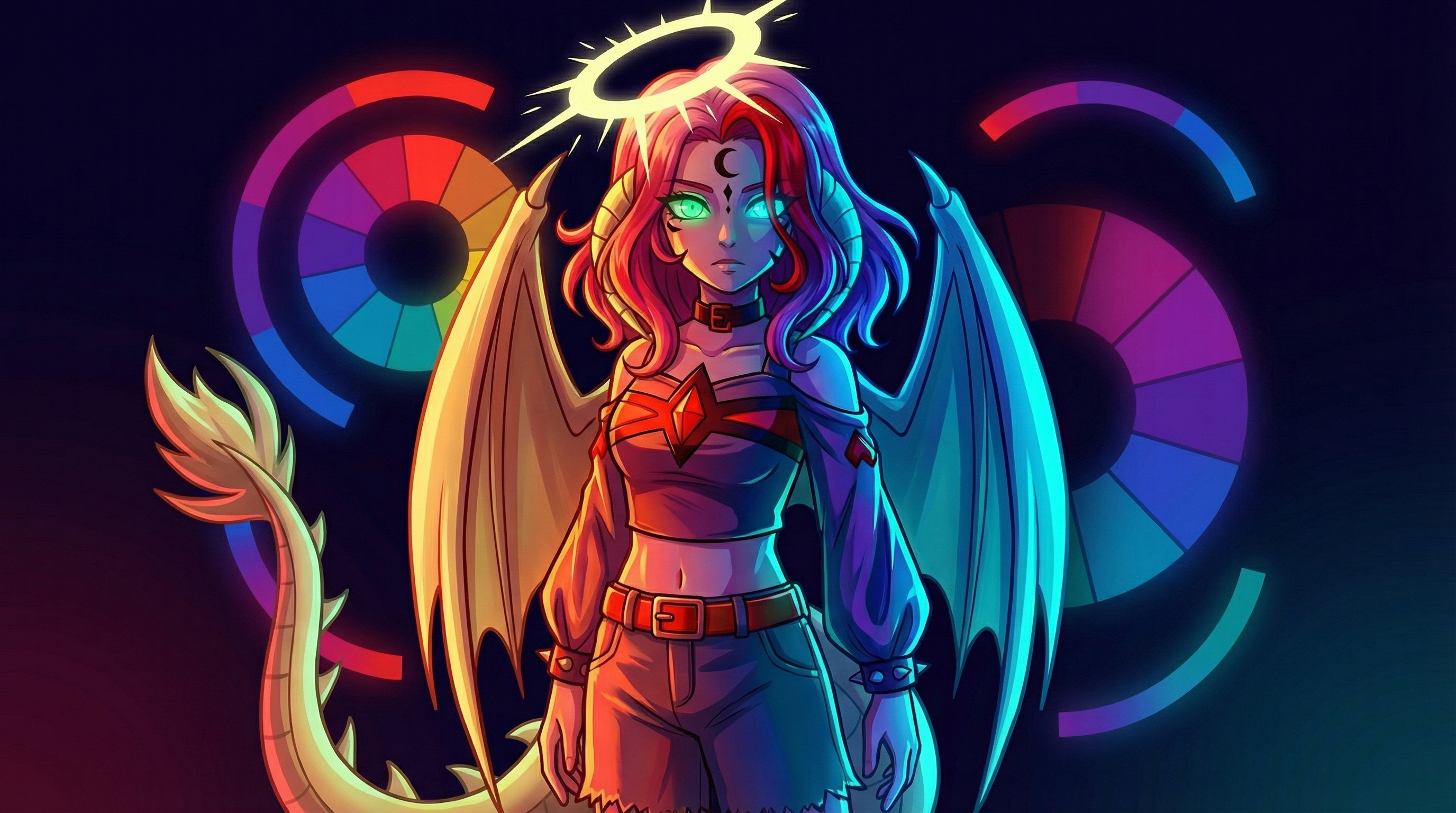
Color theory is one of the most powerful tools in character design—and one of the easiest to overlook. Colors aren’t chosen randomly. They communicate emotion, personality, and narrative intent before a character ever speaks. When used with purpose, color becomes visual storytelling.
Why Color Matters in Character Design
Color shapes first impressions. It tells the audience how to feel about a character instantly. Dark palettes often signal mystery or danger, while bright, saturated colors suggest optimism, energy, or innocence.
These choices aren’t about aesthetics alone. They help establish mood, hint at a character’s role, and reinforce their emotional core throughout a story.
Understanding the Color Wheel
The color wheel is the foundation of smart color choices. It shows how colors relate to each other and helps designers build palettes with intention.
- Primary colors form the base.
- Complementary colors sit opposite each other and create strong contrast.
- Analogous colors sit side by side and feel harmonious.
Using the wheel helps balance visual impact—too much contrast can feel chaotic, while too much harmony can feel flat.
Color Psychology and Cultural Meaning
Colors carry emotional weight. Red can suggest passion, danger, or power. Blue can feel calm, cold, or melancholic. These associations influence how audiences interpret characters on a subconscious level.
Culture adds another layer. A color that symbolizes purity in one culture may represent mourning in another. Understanding these differences helps designers avoid miscommunication and build characters that feel intentional and respectful.
Using Color to Define Character Identity
Strong character palettes act like visual signatures. Think of characters instantly recognizable by color alone. A consistent palette reinforces identity, making characters memorable even in silhouette or motion.
Color can also track transformation. Shifts in palette over time can reflect growth, corruption, healing, or internal conflict—telling a story visually without exposition.
Designing Across Different Mediums
Color must adapt to the medium. In 2D animation, bold flat colors ensure readability. In 3D, lighting and texture affect how colors appear, often requiring adjustment.
Games introduce environmental interaction—colors must stand out without clashing with backgrounds. Accessibility matters too. High contrast and thoughtful palette choices help ensure characters are readable for all audiences.
Advanced Color Techniques
Once the basics are solid, designers can push further. Gradients, highlights, and shadow tones add depth and mood. Texture changes how color feels—smooth surfaces read differently than rough or matte ones.
Trends evolve, but intentional color choices endure. The most iconic characters adapt their palettes over time while staying visually recognizable.
FAQs
Q: Why is color theory important in character design?
A: Color communicates emotion, personality, and narrative intent instantly, helping audiences understand characters at a glance.
Q: How do I choose the right colors for a character?
A: Start with personality and story role, then use the color wheel and psychology to build a balanced, intentional palette.
Q: What is color psychology in character design?
A: Color psychology studies how colors influence emotions and perceptions, allowing designers to guide audience reactions subconsciously.
Q: How do colors change across animation, games, and 3D?
A: Lighting, texture, motion, and environment affect how colors appear, requiring adjustments for clarity and consistency.
Q: Can color show character growth?
A: Yes. Shifts in palette can visually represent transformation, emotional change, or narrative progression.


Leave a Reply