This post contains affiliate links, meaning I may earn a commission if you click through and make a purchase. As an Amazon associate, I earn from qualifying purchases. This comes at no additional cost to you. I only recommend products or services that I believe will provide value to my readers based on personal experience or thorough research.
Storyboarding is the foundation of animation production. Before characters move or scenes come to life, storyboards define how the story unfolds visually—shot by shot, moment by moment. They act as a visual blueprint that turns scripts into clear, actionable sequences.
The practice dates back to Walt Disney Studios in the 1930s, where animators needed a way to plan complex sequences efficiently. While tools have evolved, the goal remains the same: solve storytelling problems before animation begins.
A strong storyboard aligns the entire team. Directors, animators, and artists all see the same vision, reducing confusion and costly revisions later in production.
From Script to Visual Story
Storyboarding is where written ideas become visual storytelling. Artists break scripts into key beats, deciding how each moment is framed, paced, and emotionally delivered.
Pacing is one of the storyboard’s most powerful functions. Panels allow creators to test timing—deciding when to linger on emotion or push action forward. These choices shape how the audience experiences the story.
If a scene feels unclear or awkward on the storyboard, it’s a sign the idea needs refinement. Fixing issues here is far easier than correcting them during animation.
Tools and Techniques for Animation Storyboards
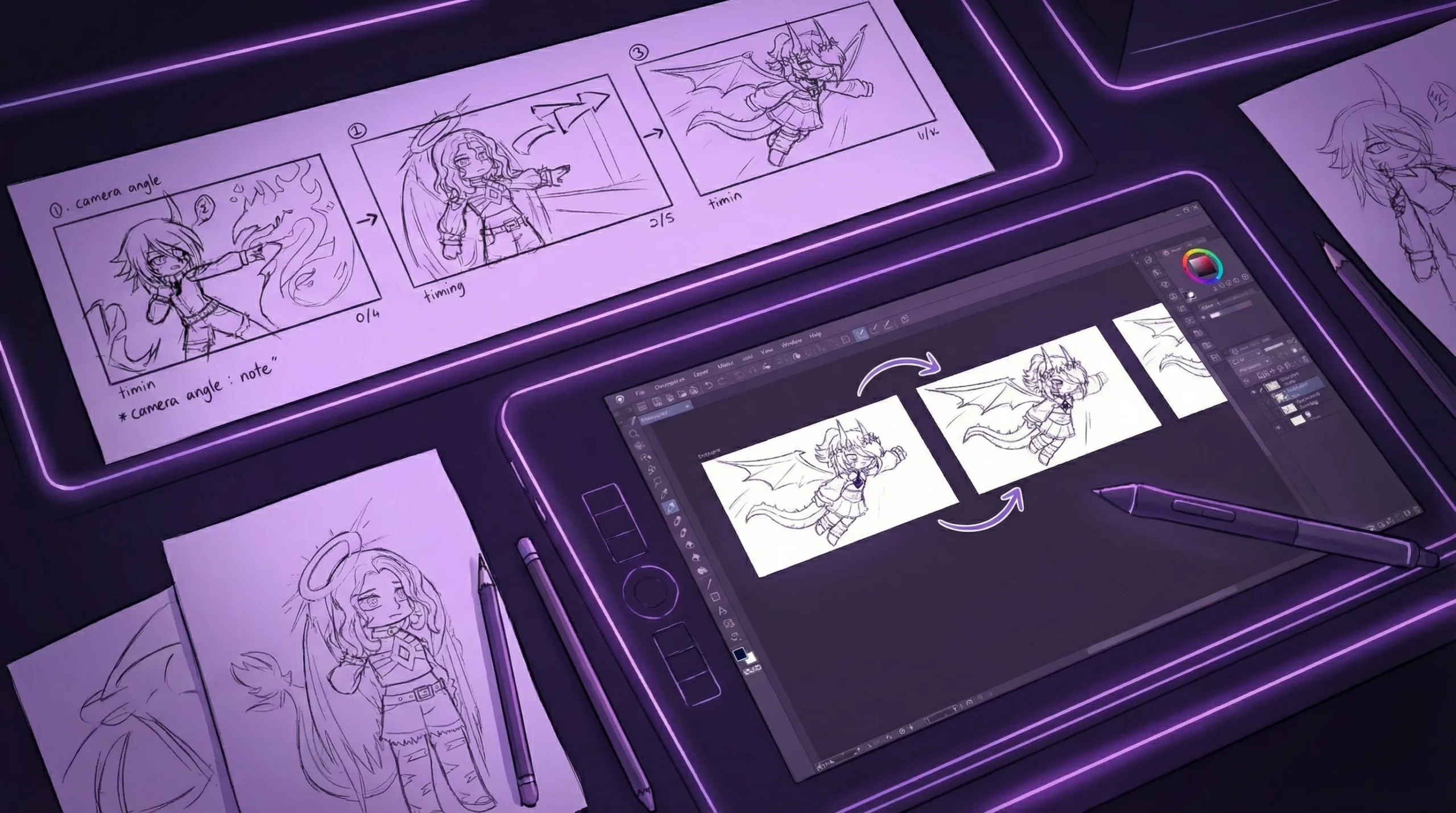
Animators work with both traditional and digital tools. Hand-drawn boards strengthen fundamentals, while digital software like Storyboard Pro enables fast iteration, timing controls, and collaboration.
Effective storyboards prioritize readability. Clean compositions, strong silhouettes, and concise notes help teams understand action and emotion instantly without unnecessary detail.
Timing notes, camera moves, and motion cues are especially important in animation. These guide animators on how scenes should feel, ensuring consistency from storyboard to final frame.
How Storyboards Shape Final Animation
Storyboards influence nearly every creative decision downstream. They help define staging, performance, and visual flow before production resources are committed.
Iteration is essential. Feedback and revisions often lead to stronger storytelling and unexpected creative breakthroughs. Many iconic animated scenes evolved through multiple storyboard passes.
Even as animation technology advances, storyboards remain indispensable. Tools may change, but clear visual storytelling will always be the heart of animation production.
FAQs: Storyboarding for Animation
What is storyboarding in animation?
Storyboarding is the process of visualizing a script through sequential panels that show shots, action, pacing, and transitions before animation begins.
Why is storyboarding important for animation?
It identifies story and pacing issues early, saving time and production costs while keeping teams aligned.
Do animation storyboards need detailed drawings?
No. Clarity matters more than polish. Simple sketches communicate ideas more effectively.
What tools are commonly used for animation storyboarding?
Studios often use Storyboard Pro, Photoshop, or hand-drawn boards depending on workflow needs.
How do storyboards affect pacing?
They define shot length and transitions, allowing creators to test rhythm before animation starts.
Can storyboards change during production?
Yes. Storyboards are meant to evolve through feedback and iteration.


Leave a Reply